

Can a garment steam iron be used on all types of fabrics?
Nov 10, 2025
As a supplier of garment steam irons, I often get asked the question: Can a garment steam iron be used on all types of fabrics? It's a valid concern, as different fabrics have unique properties and require specific care to maintain their quality and appearance. In this blog post, I'll delve into this topic, exploring the compatibility of garment steam irons with various fabric types and providing useful tips to ensure safe and effective use.
Understanding the Basics of Garment Steam Irons
Before we discuss fabric compatibility, let's briefly understand how garment steam irons work. These devices use steam to relax the fibers in fabric, making it easier to remove wrinkles. The steam penetrates the fabric, softening the fibers and allowing them to be reshaped. Unlike traditional irons that use direct heat, steam irons are generally gentler on fabrics, reducing the risk of scorching or burning.
Fabrics Suitable for Garment Steam Irons
- Cotton
Cotton is one of the most common and versatile fabrics, and it responds very well to steam ironing. The natural fibers in cotton absorb steam easily, allowing for quick and efficient wrinkle removal. Whether it's a cotton shirt, a pair of cotton pants, or a cotton tablecloth, a garment steam iron can effectively smooth out wrinkles without causing damage. Just make sure to use a medium to high steam setting for best results. - Linen
Linen, like cotton, is a natural fiber made from the flax plant. It has a tendency to wrinkle easily but looks beautiful when pressed. A garment steam iron is an excellent tool for ironing linen. The steam helps to relax the stiff linen fibers, making them easier to straighten. However, be careful not to over - steam, as linen can become too damp and take a long time to dry. - Silk
Silk is a delicate and luxurious fabric that requires gentle handling. While it's possible to use a garment steam iron on silk, you need to be extra cautious. Set the steam iron to a low steam and heat setting to avoid damaging the delicate silk fibers. Hold the steam iron a few inches away from the fabric to prevent direct contact and potential scorching. This way, the steam can still penetrate the fabric and remove wrinkles without harming the silk. - Polyester
Polyester is a synthetic fabric that is known for its durability and wrinkle - resistance. A garment steam iron can be used on polyester to give it a crisp and smooth appearance. Since polyester doesn't absorb steam as much as natural fibers, you may need to hold the steam iron closer to the fabric and use a slightly higher steam setting. However, be careful not to overheat the polyester, as it can melt at high temperatures. - Rayon
Rayon is a semi - synthetic fabric made from cellulose fibers. It has a soft and smooth texture but can be prone to wrinkling. A garment steam iron can be used on rayon, but similar to silk, it requires a gentle approach. Use a low to medium steam setting and avoid applying too much pressure. Rayon can shrink if exposed to too much heat or moisture, so it's important to be careful.
Fabrics to Approach with Caution
- Wool
Wool is a natural fiber that is sensitive to heat and moisture. While a garment steam iron can be used on wool, it must be done with extreme care. Set the steam iron to a very low steam and heat setting. Wool can shrink or lose its shape if over - steamed or over - heated. It's also a good idea to use a pressing cloth between the steam iron and the wool fabric to protect it. - Acrylic
Acrylic is a synthetic fiber that mimics the look and feel of wool. It can be steam - ironed, but like polyester, it has a relatively low melting point. Use a low steam and heat setting and keep the steam iron moving to prevent overheating. If the acrylic gets too hot, it can start to deform and lose its shape.
Fabrics Not Recommended for Garment Steam Irons
- Spandex
Spandex, also known as Lycra, is a stretchy synthetic fiber commonly used in athletic wear and form - fitting clothing. It has a very low melting point and can be easily damaged by the heat and steam from a garment steam iron. Using a steam iron on spandex can cause the fabric to lose its elasticity and shape, so it's best to avoid it. - Some Specialty Fabrics
There are also some specialty fabrics, such as those with heat - sensitive prints, sequins, or beads. These fabrics are not suitable for steam ironing because the steam and heat can damage the prints, melt the sequins, or cause the beads to fall off.
Tips for Using a Garment Steam Iron on Different Fabrics
- Read the Care Label: Always check the care label on the garment before using a steam iron. The care label provides specific instructions on how to care for the fabric, including whether steam ironing is recommended.
- Test on a Small Area: If you're unsure about using a steam iron on a particular fabric, test it on a small, inconspicuous area first. This will help you determine if the fabric can withstand the steam and heat without being damaged.
- Use the Right Steam and Heat Settings: Adjust the steam and heat settings of your garment steam iron according to the fabric type. As a general rule, start with a low setting and gradually increase if necessary.
- Keep the Iron Moving: Whether you're using a high or low setting, keep the steam iron moving to prevent overheating and potential damage to the fabric.
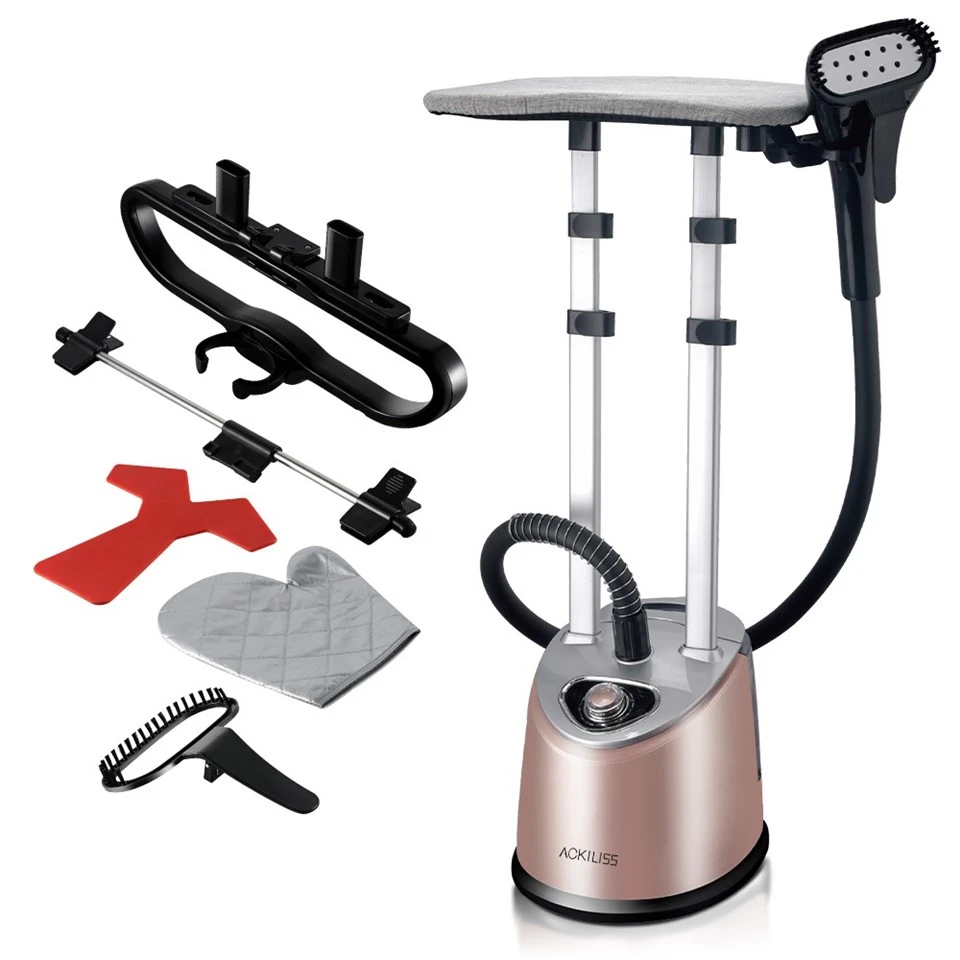
Our Standing Pole Garment Steamer
At our company, we offer a high - quality Standing Pole Garment Steamer that is designed to handle a wide range of fabrics. It has adjustable steam and heat settings, allowing you to customize the ironing process according to the fabric's needs. The standing pole design provides stability and ease of use, making it suitable for both home and professional use.
Conclusion
In conclusion, while a garment steam iron can be used on many types of fabrics, it's important to understand the specific requirements of each fabric. By using the right settings and techniques, you can safely and effectively remove wrinkles from your clothes and other fabric items. If you're in the market for a reliable garment steam iron, consider our products. We're committed to providing high - quality steam irons that meet the diverse needs of our customers.
If you're interested in purchasing our garment steam irons or have any questions about our products, we encourage you to contact us for a procurement discussion. We look forward to working with you to find the perfect steam iron solution for your needs.

References
- "The Complete Guide to Fabric Care" by Textile Institute
- "Fabric Science and Technology" by various authors in the field of textile engineering