

What is the capacity of a typical electric blender?
Jan 19, 2026
When it comes to kitchen appliances, electric blenders are a staple in many households and commercial kitchens alike. As a supplier of electric blenders, I often get asked about the capacity of a typical electric blender. In this blog post, I'll delve into this topic, exploring the factors that influence blender capacity, the different capacities available on the market, and how to choose the right capacity for your needs.
Understanding Blender Capacity
The capacity of an electric blender refers to the maximum volume of ingredients it can hold and process effectively. It is typically measured in liters or cups. The capacity you need depends on several factors, including your usage frequency, the number of people you're serving, and the types of recipes you plan to make.
Factors Influencing Blender Capacity
- Usage Frequency: If you use your blender daily, such as for making smoothies in the morning or soups for dinner, you may want a larger capacity blender to handle larger batches. On the other hand, if you only use it occasionally, a smaller capacity blender may suffice.
- Number of People Served: Consider how many people you typically serve when using the blender. If you're making drinks or food for a large family or group of friends, a larger capacity blender will be more practical. For single individuals or small families, a smaller blender may be enough.
- Types of Recipes: Different recipes require different amounts of ingredients. For example, making a large batch of salsa or a pitcher of milkshakes will require a larger capacity blender. If you mainly make single - serving smoothies or small amounts of purees, a smaller blender can do the job.
Common Blender Capacities
Blenders come in a range of capacities to meet various needs. Here are some common capacities you'll find on the market:
Small Capacity Blenders (0.5 - 1 liter or 2 - 4 cups)
These blenders are ideal for individuals or small families who only need to make single - serving smoothies, small amounts of salad dressings, or purees. They are compact, easy to store, and often more affordable. For example, if you're a busy professional who just wants to quickly make a morning smoothie for yourself, a small capacity blender can be a great choice. You can check out our Juicer Smoothie Mixer Blender Machine, which comes in a variety of capacities, including smaller ones suitable for personal use.
Medium Capacity Blenders (1 - 1.5 liters or 4 - 6 cups)
Medium - capacity blenders are a popular choice for many households. They can handle making smoothies for a small family, blending soups for a few people, or making larger batches of sauces. They offer a good balance between capacity and size, making them versatile for different types of cooking and blending tasks. Whether you're making a family - sized batch of pesto or a few servings of frozen cocktails, a medium - capacity blender can get the job done efficiently.
Large Capacity Blenders (1.5 - 2 liters or 6 - 8 cups)
Large capacity blenders are designed for those who need to make large quantities of food or drinks at once. They are suitable for commercial kitchens, large families, or for people who like to prep food in bulk. For instance, if you're running a small juice bar or a catering business, a large capacity blender will be essential. Our 2 in 1 Electric Blender 8 Blades is available in larger capacities and is perfect for handling big batches with its powerful motor and sharp blades.
Extra - Large Capacity Blenders (2+ liters or 8+ cups)
These blenders are the heavy - hitters in the market. They are typically used in commercial settings such as restaurants, cafes, and industrial food production facilities. They can handle extremely large volumes of ingredients, making them ideal for making large vats of soup, large batches of ice cream, or large quantities of smoothies for a crowd.
Choosing the Right Capacity for Your Needs
To choose the right capacity blender for you, start by assessing your typical usage. Make a list of the recipes you frequently make and the number of people you serve. This will give you a better idea of the volume of ingredients you need to blend at once.
If you're on a budget and have limited storage space, a small or medium - capacity blender may be the best option. However, if you have a large family, entertain often, or run a business, investing in a larger capacity blender will save you time and effort in the long run.
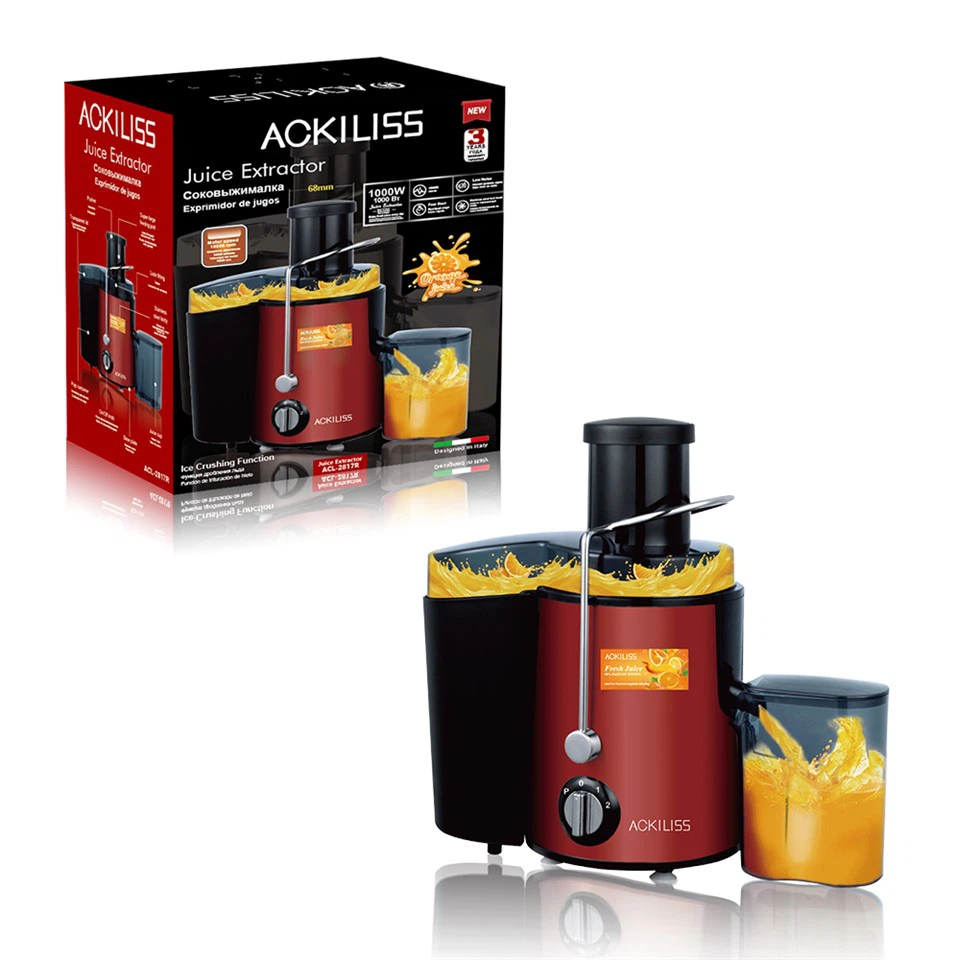

Also, consider the power of the blender in relation to its capacity. A larger capacity blender needs a more powerful motor to effectively blend larger volumes of ingredients. Look for blenders with high - wattage motors and sharp blades to ensure smooth and efficient blending.
Specialized Blender Capacities
In addition to the standard capacities, there are also specialized blenders with unique capacities designed for specific tasks. For example, our Automatic Citrus Fruit Juice Extractor has a capacity optimized for extracting juice from citrus fruits. It can handle a sufficient amount of oranges, lemons, or limes to make a refreshing glass of juice, and its design is focused on efficient juice extraction rather than general blending.
Conclusion
The capacity of a typical electric blender can vary widely, from small single - serving models to large commercial - grade machines. As a supplier, I understand the importance of choosing the right capacity for your specific needs. Whether you're a home cook looking for a convenient way to make daily smoothies or a professional chef in need of a high - capacity blender for a busy kitchen, there is a blender out there for you.
If you're interested in exploring our range of electric blenders and finding the perfect capacity for your requirements, I encourage you to reach out to us for a procurement discussion. We can provide you with detailed information about our products, including specifications, pricing, and availability.
References
- "Blender Buying Guide." Consumer Reports.
- "The Ultimate Guide to Blenders." Good Housekeeping.